How to Choose the Right Carbon Steel Plate?
Choosing the right Carbon Steel Plate begins with understanding what the plate must endure. A bridge component, pressure vessel, cutting table, and agricultural machine require different performance priorities. Thickness alone cannot determine the best option.
Dr. George Krauss, a respected metallurgist, stated, “The properties of steel depend on its composition and processing.” This principle remains practical today. Carbon content influences hardness, strength, ductility, and weldability. Heat treatment can change the plate’s behavior even when its dimensions remain identical. That difference matters on a busy fabrication floor.
Look beyond the product label. Review the required grade, thickness tolerance, surface condition, impact toughness, and delivery standard. Ask whether the plate will face repeated loading, abrasive contact, low temperatures, or outdoor moisture. A mill test certificate should confirm chemical composition and mechanical results. Traceability is not paperwork decoration. It helps connect the plate to verified production data.
Welding deserves special attention. Higher carbon content can increase hardness but may also raise cracking risk during fabrication. Preheating, controlled cooling, and qualified procedures may be necessary. The correct choice depends on the complete application, not the lowest quotation.
Be careful with assumptions.
A plate that performs well in one workshop may fail another project’s requirements. Even experienced buyers sometimes overlook edge condition, flatness, or machining allowance. This guide examines those details and compares practical selection factors. It also recognizes an uncomfortable truth: specifications can look perfect while the real service environment remains poorly understood. Better decisions come from matching verified material data with actual loads, processing methods, and operating conditions.
Understanding Carbon Steel Plate Grades and Properties
How to Choose the Right Carbon Steel Plate?
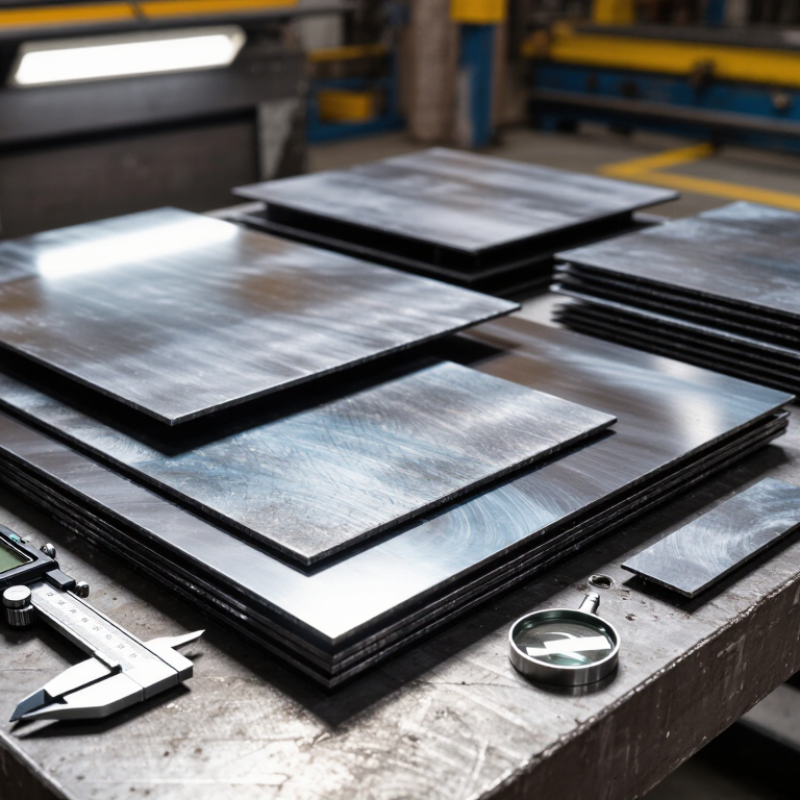
Carbon steel plate grades describe more than strength. They also indicate carbon content, weldability, toughness, and forming behavior. Low-carbon grades, such as A36 or S235, are common in frames, platforms, and general structural work. They usually weld easily and tolerate moderate forming. Higher-strength grades, such as S355, support heavier loads but may require tighter welding controls.
Check the plate’s yield strength and tensile strength first. Then review thickness, impact requirements, and operating temperature. A thicker plate is not automatically safer. Internal stress, poor fit-up, or inadequate edge preparation can still cause failure. Carbon content matters too. More carbon can increase hardness, but it may reduce weldability and raise cracking risk.
A reliable purchase should include a material certificate, heat number, chemical analysis, and mechanical test results. Confirm the governing standard because similar grade names can have different requirements. Inspect the surface for laminations, deep rust, and uneven edges before fabrication. I have seen selection decisions rely too heavily on a grade chart. That shortcut can mislead. Real service conditions deserve more attention. Ask whether the plate will be welded, bent, machined, exposed to impact, or used outdoors. Small details often change the suitable grade.
How to Choose the Right Carbon Steel Plate?
Comparison of minimum yield strength and minimum tensile strength for common carbon steel plate grades.
ASTM A36 is a general-purpose structural plate with balanced strength and weldability. ASTM A572 Grade 50 provides higher yield strength for lighter structural designs, while ASTM A516 Grade 70 is commonly selected for pressure-vessel applications. ASTM A283 Grade C is suitable for lower-strength general fabrication. Actual properties can vary with thickness, heat treatment, and product specification, so the applicable standard and mill certificate should always be verified.
Defining Project Requirements for Plate Selection
How to Choose the Right Carbon Steel Plate?
Defining project requirements should come before comparing plate prices. Start with the expected load, operating temperature, plate dimensions, and service environment. A bridge component needs different properties than a machine base or storage frame. Record these conditions clearly. Small omissions can create expensive changes later.
Choose thickness according to strength, stiffness, wear, and fabrication needs. Higher strength is not always the best answer. It may complicate cutting, forming, or welding. Check the required chemical composition and mechanical properties against the applicable project standard. Confirm yield strength, tensile strength, impact performance, and dimensional tolerances. For outdoor or humid service, plan suitable corrosion protection. Carbon steel can rust quickly when preparation is poor.
Tips: Ask the fabricator how the plate will be cut, bent, and welded. Request material certificates and inspection records from a reliable supplier. Verify heat numbers and plate dimensions upon delivery. Consider minimum order quantities and lead times early. A simple requirement sheet helps prevent confusion. Still, it may be incomplete. Review it with a qualified engineer when loads or temperatures are uncertain. Do not select a plate only because it is thicker, cheaper, or readily available.
Comparing Strength, Thickness, and Surface Conditions
How to Choose the Right Carbon Steel Plate?
Choosing carbon steel plate starts with actual service conditions, not a thickness table alone. In fabrication work, I have seen plates selected by yield strength, then rejected because forming loads were ignored. Strength should match the design load, weldability, and expected impact. Higher strength is not automatically better. Some grades resist deformation but require tighter welding control. Review the mill test certificate and applicable design standard before ordering.
Thickness affects stiffness, weight, bending behavior, and heat input during welding. A thin plate may reduce weight, but it can distort beside a long weld. A thicker plate adds rigidity, yet it may increase machining time and residual stress. Check unsupported spans, holes, edge distance, and joint details. Do not rely on nominal thickness only. Manufacturing tolerances can change the finished fit. Measure sample plates when tolerances matter.
Surface condition deserves equal attention. Mill scale may suit a rough structural part, but it can weaken coating adhesion and complicate inspection. Light rust is not always harmless. Pitting can reduce the usable section. Specify whether the plate needs descaling, oiling, blasting, or a prepared profile. Inspect edges and corners carefully; damage often hides there. I would question a perfectly clean surface when the plate will be cut and repainted. That extra cost may solve the wrong problem. Record thickness readings and surface photographs before fabrication begins.
Checking Fabrication, Welding, and Machining Requirements
How to Choose the Right Carbon Steel Plate?
Checking Fabrication, Welding, and Machining Requirements
A carbon steel plate should match the complete manufacturing process, not just the required strength. Before ordering, review thickness, plate width, bending radius, cutting method, and final dimensional tolerances. A plate that bends easily may still distort during welding. Confirm flatness requirements with the fabricator.
Welding needs closer attention. Check the mill certificate for chemical composition, tensile properties, and carbon equivalent. Higher carbon equivalent can increase cracking risk, especially in thick plates or restrained joints. Preheating, low-hydrogen consumables, controlled heat input, and suitable cooling practices may be necessary. The welding procedure should be qualified for the actual thickness and joint design. Small details matter.
Machining introduces different concerns. Harder plates can improve wear resistance but may shorten tool life and increase cutting forces. Ask about hardness variation across the plate. Leave enough machining allowance for scale removal and distortion correction. Flame or plasma cutting can create a hardened edge, so edge grinding or heat treatment may be needed before precision machining.
In shop work, I have seen teams choose by yield strength alone. That decision later caused excessive warping and rework. It was avoidable. A better review includes the cutting equipment, weld sequence, inspection method, and available machine capacity. If the plate will be bent, welded, and machined, involve each department before purchase. The cheapest plate is not always the lowest-cost choice.
Evaluating Standards, Suppliers, and Long-Term Performance
Choosing a carbon steel plate starts with the service environment, not the lowest quotation. Match grade, thickness tolerance, impact toughness, and delivery condition to the design code. ASTM A36, ASTM A572, and EN 10025 grades are not interchangeable by name alone. Check yield strength, tensile strength, chemistry, and Charpy requirements in the applicable edition. The World Steel Association reported 1.892 billion tonnes of crude steel production in 2023. Supply is broad, but consistency still depends on process control.
Supplier evaluation should reach beyond a quality certificate. Request heat-number traceability, mill test certificates, calibrated testing records, and independent ultrasonic inspection for critical plates. Compare actual test values with the specification, rather than accepting “meets standard” as sufficient evidence. The NACE IMPACT study estimated global corrosion costs at about 3.4% of global GDP, or US$2.5 trillion annually. That figure is older, but it shows why surface protection and inspection deserve budget.
Long-term performance depends on welding, storage, coating, drainage, and maintenance. A chemically compliant plate can still fail early after poor fabrication or trapped moisture. Inspect edges, cut surfaces, and repaired coating areas during service. Small gaps matter. Do not assume.
A supplier’s past delivery record is useful, yet it cannot replace project-specific verification. No checklist is perfect. Reassess the selection when temperature, loading cycles, or corrosion exposure changes.