How to Choose the Right Carbon Steel Plate for Your Project?
Choosing the right Carbon Steel Plate is crucial for various industrial applications. The demand for carbon steel products is projected to grow at a CAGR of 5.1% from 2021 to 2028, according to a report by Grand View Research. This growth reflects the material's strength and versatility. Carbon Steel Plates are widely used in construction, manufacturing, and automotive industries due to their durability and cost-effectiveness.
When selecting a Carbon Steel Plate, it is essential to consider factors like thickness, grade, and intended application. The AISI system classifies carbon steels into various grades, each tailored for specific uses. Understanding these classifications helps in making informed decisions. However, many buyers often overlook critical specifications, leading to performance issues. This oversight can result in costly delays and project failures.
Industry experts emphasize the importance of sourcing from reputable manufacturers. Quality certification is a key indicator of reliability. Look for plates that meet ASTM standards or other recognized specifications. Doing so ensures that you are investing in a product that can withstand harsh conditions. Nevertheless, even with all precautions, the potential for material defects remains. Reflecting on these aspects will ensure a more successful project outcome.
Understanding Carbon Steel Plates: Types and Characteristics
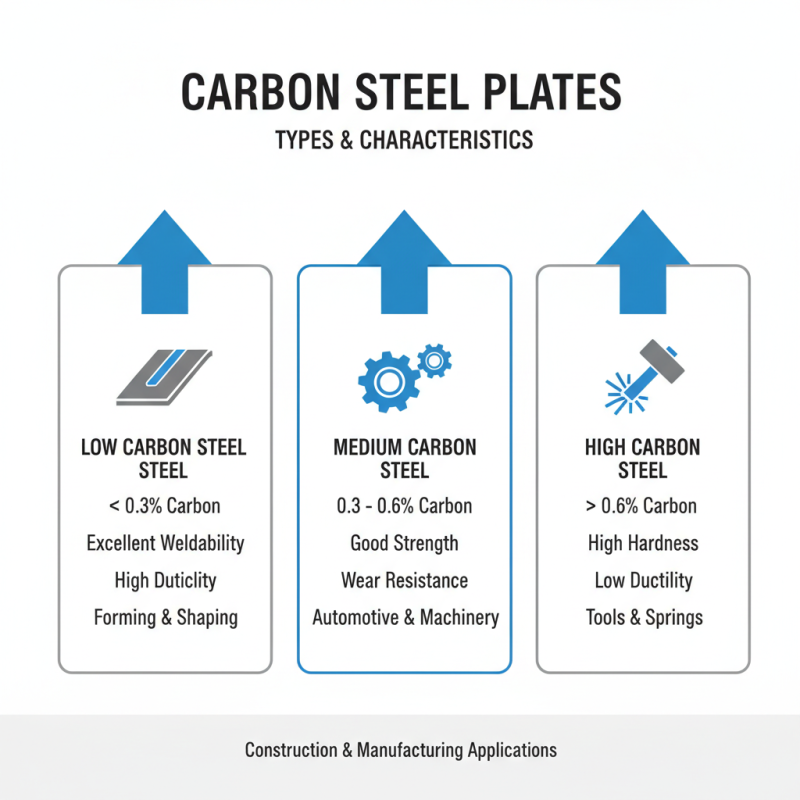
Carbon steel plates are vital in various industries, including construction and manufacturing. Understanding their types and characteristics is essential. Generally, carbon steel plates are categorized into three types: low carbon, medium carbon, and high carbon steel. Each type has unique properties. Low carbon steel contains less than 0.3% carbon, offering excellent weldability and ductility. This makes it ideal for parts that require forming and shaping.
Medium carbon steel, containing 0.3% to 0.6% carbon, strikes a balance between strength and ductility. Industry data suggests it accounts for about 25% of total carbon steel production. This type is commonly used in automotive components and machinery. High carbon steel, with carbon content exceeding 0.6%, is incredibly hard and strong. However, its brittleness can pose challenges in fabrication, making it suitable for cutting tools and wear-resistant applications.
Selecting the appropriate carbon steel plate is crucial for project success. One factor to consider is the intended application. Hardness, strength, and weldability must align with project requirements. A report by the American Iron and Steel Institute emphasizes the importance of selecting materials based on specific performance needs. Thus, it is essential to evaluate not just the properties but also the application context to ensure optimal results.
Factors to Consider When Selecting Carbon Steel Plates
Choosing the right carbon steel plate for your project involves several important factors. Each project has specific requirements that dictate the type of plate needed. Begin by considering the thickness required for your application. Thicker plates offer better durability but can also be heavier and harder to manage. Think about the overall weight of your project when making this choice.
Next, evaluate the grade of carbon steel. Different grades reflect varying levels of strength and corrosion resistance. It's crucial to match the grade to your project's operational environment. For example, projects exposed to moisture may benefit from higher corrosion-resistant grades. Make a checklist of conditions your plates will face.
Tips: Always consult with a steel expert before finalizing your decision. They can provide valuable insights. Additionally, don't hesitate to ask for samples. Testing materials in your specific conditions often reveals details that specifications cannot. Consider how your selected plate will integrate with other materials in your project. Compatibility can influence performance significantly. Take time to reflect on the long-term implications of your material choice. This decision impacts the durability and safety of your project.
How to Choose the Right Carbon Steel Plate for Your Project? - Factors to Consider When Selecting Carbon Steel Plates
| Factor |
Description |
Recommendation |
| Thickness |
The thickness of the plate affects its strength and weight. It is crucial to select a thickness that meets the project's structural requirements. |
Assess the load-bearing needs of your application. |
| Chemical Composition |
Different carbon percentages influence hardness and weldability. Matching the composition to your project requirements is essential. |
Choose a composition that aligns with your mechanical property needs. |
| Finish |
The surface finish can impact the performance and bonding of the steel. Common finishes include hot-rolled and cold-rolled. |
Select a finish that enhances the durability and aesthetic of the end product. |
| Application |
Understand the specific requirements of the application, such as exposure to elements, stress factors, and potential corrosion. |
Identify whether the plate will be used for structural, fabrication, or decorative purposes. |
| Standards and Grades |
Familiarize yourself with the various grades of carbon steel plates and their respective standards, such as ASTM, AISI. |
Ensure compliance with industry standards relevant to your project. |
Assessing Project Requirements for Carbon Steel Plate Thickness
Choosing the right carbon steel plate thickness is critical for project success. Thickness affects strength, weight, and durability. For example, construction projects often require a minimum thickness of 6 mm for structural integrity. In contrast, manufacturing industries may prefer thinner plates, around 2-4 mm, to minimize weight without sacrificing performance.
Project requirements must align with load-bearing capacities and environmental conditions. The American Institute of Steel Construction suggests that for heavy-duty applications, a thickness of at least 8 mm is advisable due to potential stress and impact. Factors such as welding processes and exposure to corrosive environments should also influence thickness selection. Industry standards, like ASTM A36, provide guidelines on chemical composition and mechanical properties, ensuring that plates meet specific performance criteria.
When assessing your project's needs, consider the trade-offs of thicker vs. thinner plates. While thicker plates enhance strength, they can be more challenging to work with and require advanced fabrication techniques. Conversely, opting for thinner plates may lead to constructing lighter products but could compromise structural integrity under significant loads. Each project demands careful evaluation of these factors to achieve the desired balance between functionality and efficiency.
Evaluating Cost versus Quality in Carbon Steel Plate Selection
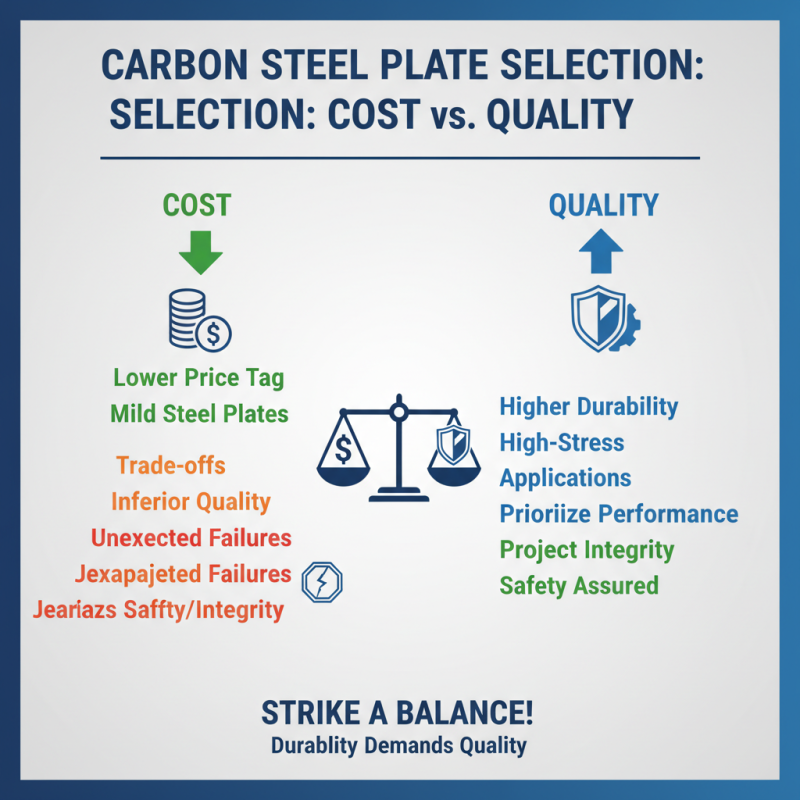
When evaluating cost versus quality in carbon steel plate selection, it’s crucial to strike a balance. A lower price tag may seem appealing, but it often comes with trade-offs. Inferior quality plates can lead to unexpected failures, jeopardizing safety and project integrity. A project that demands high durability should prioritize quality. Mild steel plates, though cheaper, may not withstand the performance limits in high-stress applications.
It's essential to consider your project's specific requirements. A thorough analysis of the operational environment is key. Will the plate be exposed to extreme temperatures or corrosive conditions? Quality steel can significantly reduce maintenance costs over time. Investing in a high-grade carbon steel plate may seem excessive initially, but it can save you from costly repairs later. Understanding your project’s needs allows for better decision-making.
Reflecting on previous projects can also help guide your choice. Did you face challenges with low-quality materials? Learning from those experiences is vital. Engaging with experts and seeking their insights can illuminate the path toward making a more informed decision. Ultimately, it leads to a more reliable outcome that justifies the initial investment. Balancing cost and quality can be complex, but with careful consideration, it’s attainable.
Common Applications for Different Grades of Carbon Steel Plates
When selecting a carbon steel plate, understanding the grade is vital. Different grades serve unique purposes. For instance, mild steel plates, often classified as A36, are widely used in construction. They offer decent strength and weldability. These plates can be easily cut and shaped, making them ideal for structural components and general fabrication.
Higher grades, like A572, are tailored for applications requiring exceptional strength. These plates find their place in bridge construction and heavy machinery. Their yield strength and toughness make them a preferred choice for demanding environments. For projects like pipelines, common grades often include API 5L, which adheres to strict standards for oil and gas applications. The choice of grade impacts durability and performance.
While it's essential to select the correct grade, projects sometimes face challenges. A mismatch in application can lead to unforeseen issues. For example, using a high-strength plate in a non-critical application could increase costs unnecessarily. Likewise, opting for a lower grade in a high-stress environment can result in failure. Understanding the nuances of each grade helps mitigate such risks and ensures reliable outcomes.