Leave Your Message

Top 10 Galvalume Coil Suppliers for Global Buyers

Choosing the right Galvalume Coil supplier can shape a project’s durability, cost, and delivery schedule. Global buyers need more than attractive pricing. They need traceable steel, stable coating quality, dependable logistics, and responsive technical support.

Galvalume Coil combines aluminum, zinc, and silicon in a metallic coating designed for strong atmospheric corrosion resistance. However, performance changes with climate, forming methods, storage, and installation details. Corrosion engineer Dr. Pierre R. Roberge offers a useful reminder: “Corrosion is a natural process that cannot be stopped, but it can be controlled.” That principle matters when comparing suppliers across coastal, industrial, rural, and high-humidity markets.

This guide examines ten leading Galvalume Coil suppliers for international buyers. The comparison considers coating designations, substrate grades, coil width, thickness tolerance, production capacity, export experience, certifications, and after-sales service. It also considers practical details, such as mill test certificates, packaging for ocean transport, edge protection, and sample approval. These details are easy to overlook.

Price alone misleads.

A supplier may quote less but provide longer lead times or limited technical documentation. Another may offer stronger quality control but require larger minimum orders. No single supplier fits every application. That is an inconvenient truth. Buyers should verify current specifications, production availability, and regional compliance before signing contracts. This list is a practical starting point, not a substitute for independent inspection. Careful comparison can reduce coating failures, shipment surprises, and costly replacement work.
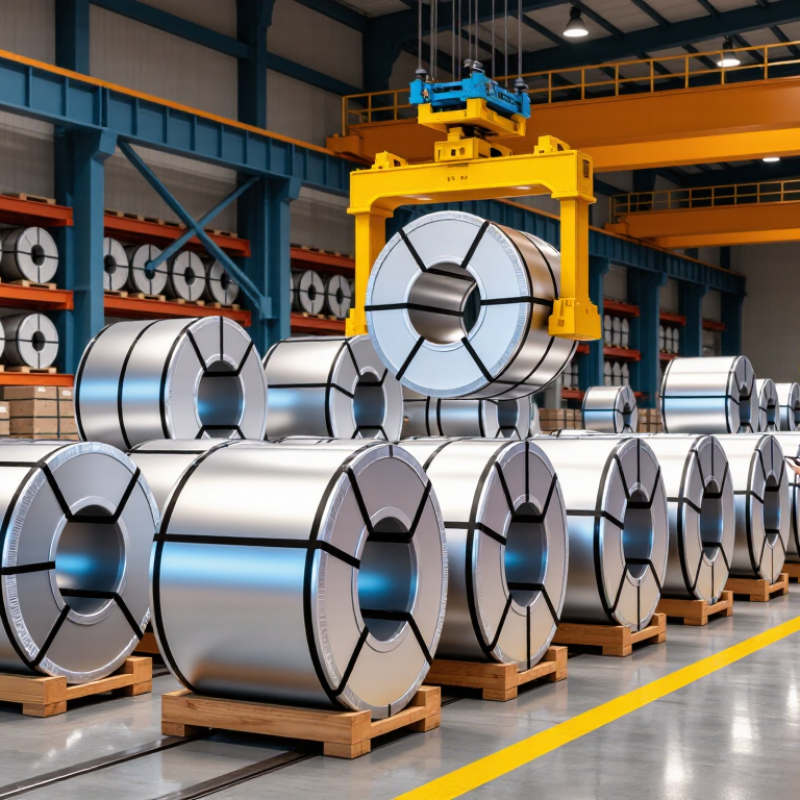
Top 10 Galvalume Coil Suppliers for Global Buyers

What Galvalume Coil Is and Why Global Buyers Use It

What Galvalume Coil Is and Why Global Buyers Use It

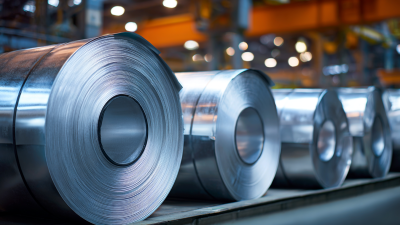
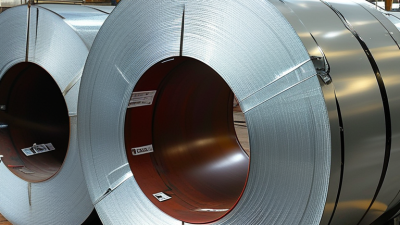
Galvalume coil is steel sheet coated with an alloy of about 55% aluminum, zinc, and silicon. ASTM A792/A792M specifies this coating system for corrosion-resistant steel products. Aluminum forms a protective barrier. Zinc helps protect exposed edges and small scratches. The surface often looks like fine silver crystals under warehouse lighting.

Global buyers choose it for roofing, wall panels, HVAC equipment, and agricultural buildings. The World Steel Association reported about 1.89 billion tonnes of crude steel production in 2023. That scale supports broad supply networks and standardized processing. Galvalume can also reduce repainting needs in many environments. However, performance depends on coating mass, forming quality, cut-edge exposure, and local humidity. It is not a universal solution. Coastal salt, standing water, and contact with incompatible metals can shorten service life.

Tips: Ask for the ASTM grade, coating designation, coil width tolerance, and mill test certificate. Check whether the application needs AZ50, AZ55, or another coating level. Request salt-spray or corrosion data carefully; laboratory hours do not equal real service years. ISO 9223 exposure categories can help compare atmospheric conditions, but site inspection remains valuable. In my experience, buyers often focus on price first and underestimate freight damage. Inspect packaging, edge protection, and moisture control before signing the purchase agreement.
Galvalume Coil: Typical ASTM A792 Coating Designations

Galvalume coil is carbon steel coated with an aluminum-zinc-silicon alloy containing approximately 55% aluminum, 43.4% zinc, and 1.6% silicon by mass. Its aluminum content supports corrosion resistance and heat reflectivity, while zinc provides sacrificial protection to exposed steel areas.

The chart shows common ASTM A792 AZ coating designations. Coating mass is measured in grams per square metre across both sides of the coil; higher coating mass generally provides greater environmental protection.

How to Evaluate Galvalume Coil Suppliers Worldwide

Top 10 Galvalume Coil Suppliers for Global Buyers

How to Evaluate Galvalume Coil Suppliers Worldwide

A reliable evaluation starts with the coil itself, not a polished website. Request the steel grade, coating composition, coating mass, thickness tolerance, width tolerance, and mechanical properties. Ask for recent mill test certificates and independent inspection options. Check the numbers.

Surface quality matters during forming and painting. Examine sample coils for edge cracks, bare spots, waviness, oil stains, and inconsistent gloss. Confirm whether the supplier controls tension leveling, slitting accuracy, and protective film application. Small defects can become expensive after stamping or roll forming.

Supply reliability requires more than a competitive quotation. Review production capacity, normal lead times, minimum order quantities, packaging methods, and port handling experience. Ask for batch traceability from raw steel to finished coil. A dependable supplier should explain how complaints are investigated and corrected. Ask for evidence.

Buyers should also compare payment terms, shipping documents, quality guarantees, and communication speed. Verify whether certificates match the destination market’s requirements, including environmental and product documentation. A low price may hide weaker coating control or costly delays. I have seen purchasing teams focus too heavily on price, then discover that replacement coils disrupted production. That mistake is understandable, but it deserves careful review. Suppliers should provide clear records, realistic promises, and measurable answers rather than broad assurances.

Top 10 Galvalume Coil Suppliers by Product Range and Market Reach

Top 10 Galvalume Coil Suppliers for Global Buyers

The top ten Galvalume coil suppliers differ mainly in product range and market reach. Strong suppliers usually offer several thicknesses, widths, coating weights, and surface finishes. Some also provide regular spangle, zero-spangle, and anti-fingerprint options. These choices support roofing, wall panels, ductwork, and light industrial fabrication.

Market reach matters as much as steel quality. Leading suppliers serve regional distributors and overseas buyers through coastal ports, inland warehouses, and established freight channels. They commonly provide mill test certificates, coating reports, packing photos, and production samples. Buyers should check whether the supplier supports small trial orders or only full-container volumes. That detail can change the real purchase cost.

A dependable supplier should explain yield strength, tensile strength, bend performance, and coating adhesion clearly. Clear answers often reveal practical experience. Delivery estimates should include production time, inspection, and port handling. No ranking is perfect. A supplier with broad export coverage may offer fewer custom sizes. Another may provide excellent technical support but slower shipping. I would recheck stock, certificates, and local import requirements before signing any order. Small errors in coating weight or coil dimensions can create expensive problems during fabrication.

Top 10 Galvalume Coil Suppliers for Global Buyers - Top 10 Galvalume Coil Suppliers by Product Range and Market Reach

Rank Supplier Profile Primary Production Region Typical Galvalume Product Range Coating Composition Typical Thickness Typical Width Common Technical Standards Surface Options Downstream Forms Typical Export Reach
1 Large integrated flat-steel producer East Asia Commercial, structural, and high-strength galvalume coils 55% aluminum–43.4% zinc–1.6% silicon alloy coating 0.25–2.00 mm 800–1,850 mm ASTM A792/A792M; EN 10346; JIS G3321 Regular spangle, minimized spangle, skin-passed finish Slit coils, sheets, roofing panels, wall panels Asia-Pacific, Middle East, Africa, Europe, Americas
2 High-volume coated-steel manufacturer South Asia Roofing-grade, appliance-grade, and construction-grade coils Aluminum-zinc alloy coating, commonly AZ50–AZ150 0.30–1.60 mm 900–1,600 mm ASTM A792/A792M; IS 15961; EN 10346 Regular spangle, zero-spangle, chromated or passivated Cut-to-length sheets, corrugated sheets, decking profiles South Asia, Southeast Asia, Africa, Gulf markets
3 Export-oriented galvanized and galvalume mill East Asia Construction coils, prepainted feedstock, and structural grades 55% aluminum-based alloy coating; custom coating mass available 0.20–1.50 mm 750–1,650 mm ASTM A792/A792M; EN 10346; JIS G3321 Regular spangle, minimized spangle, anti-fingerprint options Slit coils, flat sheets, roll-formed roofing and siding Europe, Latin America, Africa, Middle East, Southeast Asia
4 North American coated-sheet supplier North America Commercial roofing, agricultural buildings, HVAC, and structural products Aluminum-zinc alloy coating, often specified by total coating mass 0.30–2.30 mm 900–1,830 mm ASTM A792/A792M; ASTM A653/A653M for related coated products Regular spangle, minimized spangle, acrylic-coated surfaces Roofing panels, building components, slit-to-width coils United States, Canada, Mexico, selected Caribbean markets
5 European quality-focused steel producer Western and Central Europe Building envelope, industrial, automotive-related, and appliance applications Aluminum-zinc-silicon alloy coating with controlled surface quality 0.40–2.00 mm 900–1,850 mm EN 10346; EN 10143; ASTM A792/A792M Minimized spangle, skin-passed, passivated, oiled Precision slit coils, sheets, profiled building products European Union, United Kingdom, North Africa, Middle East
6 Integrated steelmaker serving infrastructure projects East Asia Structural grades, roofing grades, and high-durability exterior products 55% aluminum–zinc alloy coating; selected heavier coating classes 0.30–2.50 mm 800–2,000 mm ASTM A792/A792M; JIS G3321; EN 10346 Regular spangle, minimized spangle, passivated surface Building panels, roofing sheets, roll-formed sections Asia-Pacific, Middle East, Africa, South America
7 Specialty coated-steel processor Southeast Asia Light-gauge construction, roofing, wall cladding, and prepainted substrates Aluminum-zinc alloy coating, commonly AZ50–AZ150 0.20–1.20 mm 700–1,600 mm ASTM A792/A792M; EN 10346; regional building specifications Regular spangle, zero-spangle, passivated, anti-fingerprint Prepainted coils, corrugated sheets, roofing accessories Southeast Asia, Oceania, South Asia, Middle East
8 Middle Eastern flat-steel distributor and processor Middle East Stock coils, cut sheets, roofing products, and project-specific material 55% aluminum-zinc coating sourced to international specifications 0.30–1.50 mm 900–1,600 mm ASTM A792/A792M; EN 10346; project-specific specifications Regular spangle, minimized spangle, passivated Slit coils, cut-to-length sheets, roofing and cladding profiles Gulf Cooperation Council, North Africa, East Africa, Central Asia
9 Latin American construction-steel supplier Latin America Roofing, agricultural, industrial, and residential construction grades Aluminum-zinc alloy coating with standard and heavy coating masses 0.25–1.50 mm 800–1,600 mm ASTM A792/A792M; ABNT-related specifications; EN 10346 Regular spangle, minimized spangle, passivated or oiled Corrugated roofing, standing-seam panels, slit coils Latin America, North America, Caribbean markets
10 Regional service-center network South Asia and Southeast Asia Standard roofing coils, narrow slit coils, and low-volume custom orders Aluminum-zinc alloy coating, generally AZ50–AZ150 0.25–1.20 mm 600–1,500 mm ASTM A792/A792M; EN 10346; JIS G3321 Regular spangle, minimized spangle, passivated Slit coils, cut sheets, roofing and siding panels Domestic markets, Southeast Asia, Africa, selected Middle Eastern markets

Data note: The specifications shown are representative market ranges for anonymized supplier profiles. Final availability, coating mass, tolerances, certifications, minimum order quantities, and export destinations should be confirmed directly against the supplier’s current mill certificate and technical datasheet.

Comparing Quality, Certifications, Pricing, and Delivery Capabilities

Selecting the top 10 galvalume coil suppliers requires more than comparing advertised prices. Experienced buyers inspect coating uniformity, surface finish, tensile strength, and edge condition. A clean, stable surface matters.

Reliable suppliers should provide mill test certificates, coating reports, dimensional records, and traceable batch numbers. Certifications such as ISO 9001 can support process control, but they do not replace independent inspection. Ask for samples. Then test them under your actual forming and painting conditions.

Pricing deserves careful review. A low offer may exclude slitting, packaging, inland transport, inspection, or import documentation. Request a detailed quotation with coil width, thickness tolerance, coating mass, minimum order quantity, and payment terms. Delivery capability also needs evidence. Check production capacity, port options, booking procedures, and realistic lead times. Suppliers with regional warehouses may respond faster, while direct mill shipments can reduce handling.

The best comparison uses the same specification for every supplier. Include tolerances and packaging details. Do not rely on polished brochures. In practice, delivery dates sometimes shift because of vessel schedules, raw material changes, or incomplete approvals. That risk is easy to underestimate. A written contingency plan helps.

Supplier performance should be reviewed after trial orders. Record rejection rates, communication speed, document accuracy, and arrival condition. One weakness may not disqualify a supplier, but repeated issues deserve attention. Price is important. It is not the whole decision.

How to Choose the Right Galvalume Coil Supplier for Your Project

Top 10 Galvalume Coil Suppliers for Global Buyers

How to Choose the Right Galvalume Coil Supplier for Your Project

Choosing a Galvalume coil supplier requires more than comparing prices. Start with the steel grade, coating mass, width, thickness, and required mechanical properties. Ask for recent mill test certificates and confirm that the data matches your project specification. Reliable suppliers should explain whether their material follows recognized standards, such as ASTM or EN requirements. Vague answers are warning signs.

Check production experience with your intended application. Roofing panels, wall systems, and industrial components may require different surface finishes and forming performance. Request a physical sample when possible. Inspect the coating appearance, edge quality, flatness, and protective packaging. Small defects can become costly after slitting or roll forming. They matter.

Traceability is equally important. Each coil should have a clear heat number, batch record, and inspection history. Confirm the supplier’s ability to maintain stable thickness and coating tolerances across repeated orders. Discuss shipping methods, moisture protection, loading photos, and realistic delivery times. A supplier that promises everything immediately may not understand production limits.

I have learned that the lowest quotation is not always the best value. One overlooked tolerance can create serious waste. Still, technical documents alone cannot prove daily performance. Speak with the quality team, ask difficult questions, and compare how clearly they respond. Review their complaint process before placing a large order. A dependable partner accepts practical concerns and provides evidence, not polished claims.