Leave Your Message

Top Copper Strip Manufacturers Worldwide?

Choosing the top Copper Strip manufacturers worldwide requires more than comparing catalog prices or production capacity. In real purchasing work, small differences matter. A clean slit edge can prevent cracking during stamping. Stable thickness can improve connector fit. Consistent conductivity can reduce heat loss in electrical assemblies. These details often become visible only after testing samples, reviewing mill certificates, and inspecting coils under practical production conditions.

This guide examines manufacturers through measurable criteria, including copper grades, thickness tolerance, width accuracy, surface finish, annealing control, packaging, and delivery reliability. It also considers experience in demanding sectors such as automotive electronics, power equipment, telecommunications, and renewable energy systems. Reputable producers should provide traceability, quality documentation, and clear responses when specifications change. Certifications can support confidence, but they should not replace independent verification. A certificate alone cannot reveal every edge defect.

No ranking is flawless. Market data changes. Regional strengths differ. Some manufacturers excel at high-volume standard strips, while others handle narrow, ultra-thin, or customized products better. That limitation matters. Buyers should match each supplier’s capabilities with their own forming methods, corrosion requirements, and compliance expectations. A practical comparison should include sample approval, technical communication, lead time, and after-sales support. Those factors may appear less impressive than a modern factory tour, yet they often determine whether a copper strip performs reliably after installation. This overview aims to offer a careful starting point, not an unquestionable verdict.
Top Copper Strip Manufacturers Worldwide?

What Copper Strip Is and Why It Matters

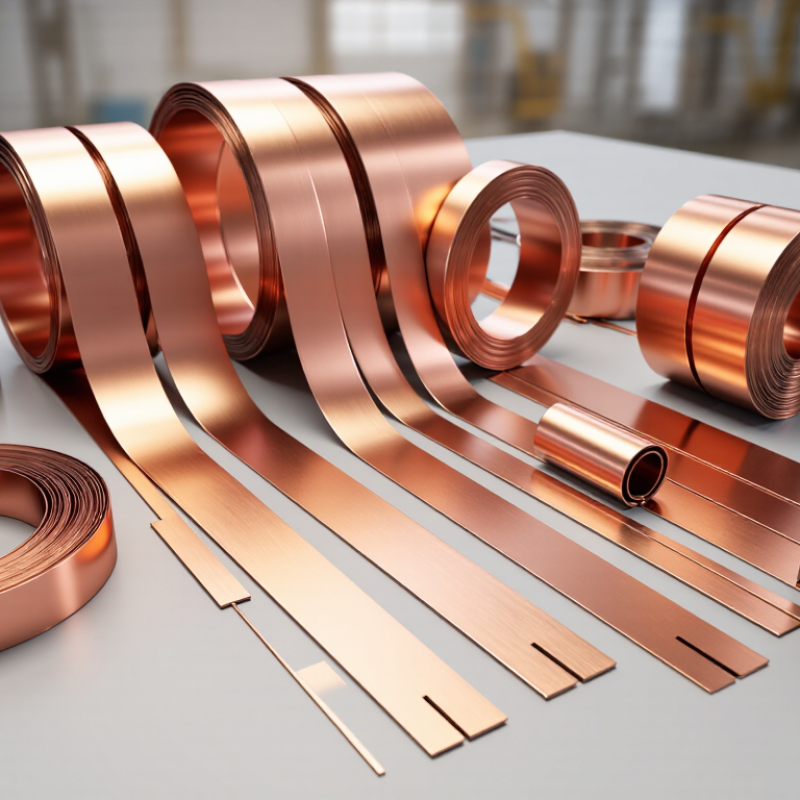
Copper strip is a flat, rolled conductor made from refined copper or copper alloys. Its width, thickness, temper, and surface finish affect performance. In practical fabrication, a small thickness error can affect stamping, bending, and heat transfer. Copper carries electricity efficiently because its electrical resistance is low. It also transfers heat quickly. These properties support battery tabs, transformers, switchgear, connectors, roofing details, and precision electronics. The material looks simple. Its specifications are not.

When comparing top copper strip manufacturers worldwide, buyers should inspect process control, not only production volume. Reliable producers document chemical composition, dimensional tolerance, tensile strength, conductivity, and testing methods. Traceable inspection records improve confidence across long supply chains. Annealed strip bends easily, while harder tempers resist deformation and hold shape. Choosing incorrectly may cause forming cracks or unwanted springback. I have found that “standard” dimensions often hide different edge conditions. That detail deserves a second check.

Tips: Match the strip to the application before requesting quotations. State alloy, thickness, width, temper, edge condition, coil weight, and conductivity requirements. Ask for sample data and a certificate of analysis. Check burrs under angled light. Measure several points, not one. Consider corrosion exposure and the joining method. A bright surface is not proof of quality. It may reflect polishing alone. Reconfirm packaging, because moisture can damage clean copper surfaces during storage.

How Global Copper Strip Manufacturers Are Evaluated

Evaluating global copper strip manufacturers requires more than comparing prices. A reliable review starts with copper purity, electrical conductivity, tensile strength, and dimensional accuracy. Ask for recent test certificates, not generic brochures. Strip thickness should remain stable across the coil, especially near the edges. Small variations can disrupt stamping, bending, or connector assembly.

Production evidence matters. Inspect the rolling mills, annealing furnaces, slitting equipment, and surface-cleaning stages. Look for calibrated gauges and clear inspection records. A capable manufacturer can explain how it controls burrs, oxidation, coil tension, and flatness. Request samples from different production lots. One perfect sample proves very little. Independent laboratory testing can verify conductivity, hardness, and chemical composition against relevant industry standards.

Supply reliability also deserves close attention. Review monthly capacity, minimum order quantities, packaging methods, and typical delivery performance. Traceability should connect each coil to its melt, processing route, and final inspection report. Environmental controls and worker safety practices reveal operational maturity, although these factors are sometimes judged too quickly. I have found that polished facilities can still have weak documentation. No scorecard is perfect. A stronger assessment combines factory visits, sample testing, customer references, and a written corrective-action process. Manufacturers should also admit process limits openly. That honesty often signals greater technical control than an impressive sales presentation.

Leading Copper Strip Manufacturers by Region

Copper strip manufacturers are distributed across regions with different technical strengths. Asia remains a major production center, supported by large refining capacity and efficient rolling facilities. Manufacturers there commonly supply battery connectors, transformer parts, heat exchangers, and electrical terminals. Buyers should examine strip thickness, width tolerance, conductivity, temper, and surface finish. Production volume alone is not enough.

European manufacturers often emphasize process control, traceability, and demanding industrial applications. Their facilities may use continuous casting, precision rolling, and automated inspection systems. These capabilities support copper strips for rail systems, renewable energy equipment, and high-reliability electrical assemblies. Certificates help, but they do not replace sample testing. A production record matters more than a polished brochure.

North American suppliers frequently focus on customized dimensions, shorter delivery routes, and technical cooperation with local fabricators. Some serve construction, telecommunications, aerospace, and power distribution markets. Regional differences can affect lead times, packaging, export documents, and minimum order quantities. No regional ranking is perfect. In practical sourcing, I would compare independent conductivity results, coil weight, edge quality, and batch traceability. A strip may meet the stated standard yet perform poorly during bending. That lesson is easy to overlook. Factories with responsive engineers and clear corrective-action records usually offer more dependable support, even when their quoted price is not the lowest.

Production Methods and Quality Standards in Copper Strip Manufacturing

Top Copper Strip Manufacturers Worldwide?

Copper strip manufacturing begins with high-purity cathodes, controlled melting, and continuous casting. The cast bar is hot-rolled, then cold-rolled to achieve precise thickness. Intermediate annealing restores ductility and controls grain structure. Slitting follows, producing clean edges for electrical, automotive, and industrial components. Experienced manufacturers monitor conductivity, hardness, tensile strength, surface condition, and dimensional tolerance throughout production. Small variations can affect stamping performance.

Quality standards should match the final application, not merely the supplier’s brochure. ASTM, EN, and ISO-based procedures may define chemical composition, mechanical properties, sampling, and inspection methods. Reliable plants use calibrated micrometers, eddy-current testing, surface checks, and traceable batch records. Certificates matter. They are not enough. A polished test report can still hide inconsistent edge quality or uneven annealing. That possibility deserves review. Independent inspections and retained samples provide stronger evidence.

Tips: Request a detailed manufacturing flow before approval. Check thickness tolerance at several points across each coil. Ask how operators control oxidation after annealing. Confirm packaging prevents moisture, scratches, and coil deformation during transport. Compare test results with your actual forming conditions, because laboratory data may not predict every production problem. A small pilot run often reveals more than a long specification sheet.

Applications and Selection Factors for Copper Strip Suppliers

Top Copper Strip Manufacturers Worldwide?

Copper strip supports demanding applications, including transformer windings, busbars, battery connectors, heat exchangers, and precision electrical contacts. Each use requires a different balance of conductivity, strength, thickness, and surface quality. A strip for a compact battery tab may need tight dimensional control, while a transformer winding may require excellent bendability and clean edges. The application comes first.

Check the copper grade and temper carefully. Electrical conductivity should match the design requirement, not merely a supplier’s general claim. Ask for thickness tolerances, width accuracy, elongation data, and surface inspection records. Burrs, dents, oxidation, or uneven edges can create problems during stamping and winding. Small defects matter. Confirm coil weight, inner diameter, packaging, and moisture protection before placing an order. Reliable suppliers should provide traceability, material certificates, and consistent testing procedures. Independent verification can also reduce risk for critical projects.

Production capability deserves close attention. Can the supplier maintain stable quality across trial orders and large volumes? Review lead times, sampling support, slitting accuracy, and response to technical questions. A low quotation may hide weak process control or expensive rejects. A polished sample can mislead. For that reason, compare several batches when possible, not one attractive coil. No supplier is perfect, and even experienced buyers can overlook packaging or delivery risks. Clear specifications and written acceptance criteria make supplier selection more dependable.